Screening tests are tests conducted at regular intervals to detect a disease like prostate cancer in its early stages. If the results of a screening test is normal, there is no suspected illnesses. If a screening test is abnormal, the disease is suspected, and tests are usually needed to further confirm the suspicion to make the diagnosis is assured. Prostate cancer is initially suspected because of an abnormality of one or two screening tests used to detect prostate cancer. Screening tests is a rectal examination with a finger and a blood test called prostate specific antigen (PSA).
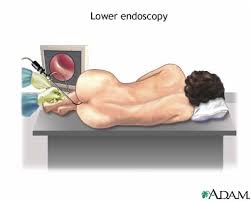
On rectal examination with a finger (digital rectal examination), the doctor felt the prostate gland with a sheathed finger into the rectum to detect abnormalities of the gland. Thus, an irregular lumps or hardness that is felt on the surface of the gland is a discovery of suspicious for prostate cancer. Therefore, doctors usually recommend examination of the rectum with a finger every year on the men was 40 years old and older.
PSA test is a simple blood test, can be repeated and accurate. He used to detect a protein (prostate specific antigen) that is released from the prostate gland into the blood. Far more important, the PSA level is usually higher in men with prostate cancer than men without prostate cancer. PSA, therefore, is valuable as a screening test for prostate cancer. Therefore, physicians recommend doing a PSA each year in men aged 50 years and older. Furthermore, for men who have higher risks of prostate cancer as discussed above, most doctors recommend PSA screening starting at even younger ages (eg at age 40 years).
The results of the PSA blood test below 4 nanograms per milliliter is generally considered normal. The results between 4 and 10 be considered as the borderline. Nila-boundary value is interpreted in the context of patient age, symptoms, signs, family history, and the changes in PSA levels over time. The results are higher than 10 is considered abnormal, suggesting the possibility of prostate cancer. Higher PSA values, were more likely diagnosis of prostate cancer. More than that, PSA levels tend to increase if the cancer has continued from prostate cancer is confined to the distribution organs (metastatic) elsewhere. These values are very high, like 30 or 40 and over, usually caused by prostate cancer.


0 comments:
Post a Comment